Gum disease — periodontal disease — is the leading cause of tooth loss in adults. More importantly: most patients who have it don't know. There is often no pain. No obvious swelling. Nothing that triggers a visit to the dentist until the disease has progressed significantly.
By the time a patient notices loose teeth or a clearly receding gum line, they may have already lost 30-50% of the bone supporting those teeth. That bone doesn't come back.
Unlike a cavity, which eventually causes pain, early periodontal disease is frequently entirely asymptomatic. The only way to detect it is through measurement — pocket depths, X-rays, and bone level assessment.
The Stages of Gum Disease
Gingivitis — Fully Reversible
Gingivitis is inflammation of the gums caused by bacterial plaque accumulation. Gums may appear red or puffy and bleed when brushed. At this stage, the disease is fully reversible with professional cleaning and improved home care. No permanent damage has occurred.
Early Periodontitis
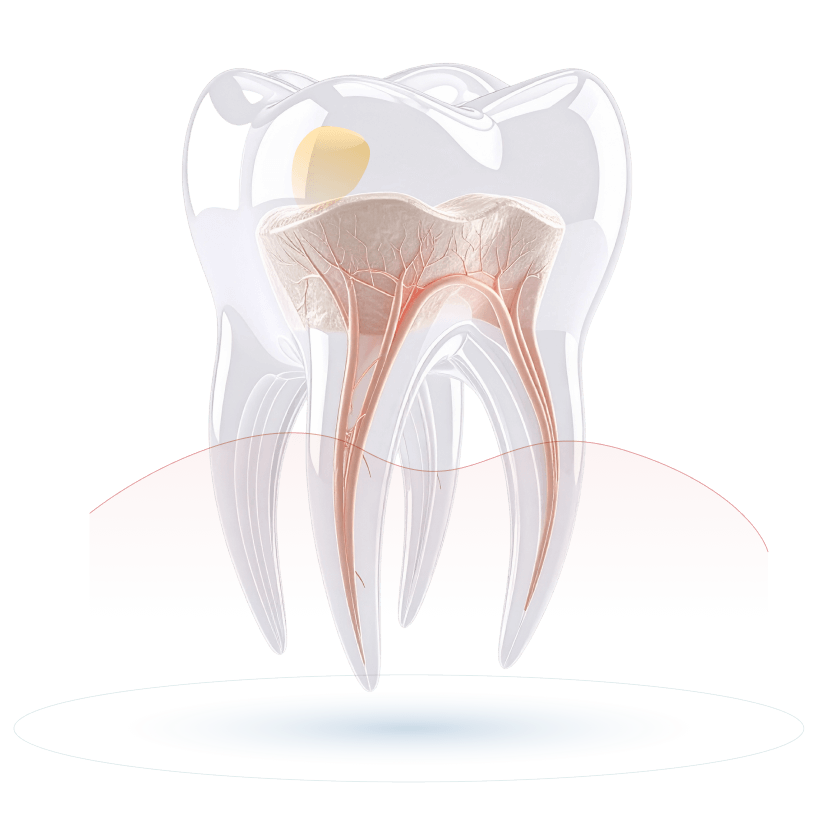
Bacteria have begun to invade below the gumline. Periodontal pockets deepen. Early bone loss begins. Still very treatable, but the bone loss is permanent — it won't regenerate on its own.
Moderate to Advanced Periodontitis
Significant bone loss. Teeth may become mobile. The infection may have spread to multiple teeth. Treatment is more intensive and the long-term prognosis for affected teeth depends on severity.
Early Warning Signs
While gum disease is often silent, these signs may indicate a problem:
- Bleeding gums when brushing or flossing — healthy gums don't bleed
- Red, swollen, or tender gums
- Persistent bad breath despite good oral hygiene
- Gums pulling away from teeth — recession creating the appearance of longer teeth
- Loose teeth or changes in bite
- Sensitive teeth where roots are becoming exposed
How AI Detects It Earlier
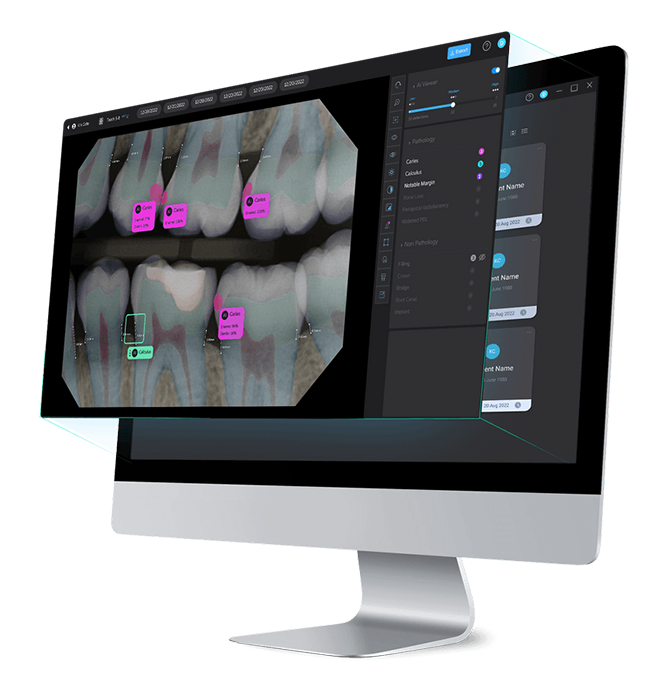
Pearl AI measures alveolar bone levels on your dental X-rays and compares them across appointments. This means we can detect progressive bone loss that begins as a subtle change in density — changes that are genuinely easy to miss when reviewing dozens of X-rays visually.
We also measure periodontal pocket depths at every visit. Together, AI bone tracking and pocket measurement give us the most complete and consistent picture of gum health available in modern dentistry.
A patient with gingivitis requires a professional cleaning and improved homecare. A patient with advanced periodontitis requires surgical intervention and may still lose teeth. The gap between those outcomes is early detection.
Treatment Options
Treatment depends on disease stage. For gingivitis and early periodontitis, professional scaling and root planing (deep cleaning below the gumline) combined with improved homecare is highly effective. For moderate to advanced cases, we may refer for specialist periodontal treatment, with ongoing supportive therapy at our clinic every 3–4 months thereafter.
Prevention
The most effective prevention strategy is simple: regular professional cleaning every 6 months, combined with twice-daily brushing and daily interdental cleaning. At our clinic, every routine appointment includes AI-supported bone level monitoring — so any change is detected at the earliest possible stage.